AI Command
Workshop
A hands-on legal AI lab for attorneys who need usable workflows, professional guardrails, and a workbook they can keep using after the program ends.
The delegation has already occurred.
Every time an attorney asks an AI system to analyze a coverage issue, summarize a deposition, or draft a reservation-of-rights letter, something has already happened: part of the work has been delegated. The AI made choices — which rules apply, which facts matter, how the argument is framed. Under the rules that govern professional responsibility, delegation does not transfer responsibility. It requires supervision.
This workshop does not tell you whether to use AI. That decision is being made — by your clients, by your competition, by the direction the profession is moving. What remains is the question of how. Attorneys who use AI without a supervision doctrine are not more efficient. They are more exposed. Rules of Engagement gives you the doctrine, and the hands-on practice to apply it.
Seven elements. One supervised workflow.
For centuries, commanders faced the same structural problem attorneys now face with AI: how to delegate high-stakes work to capable but literal-minded subordinates operating under uncertainty. COMMAND translates that discipline into a repeatable legal workflow. Its seven elements are not stylistic preferences. They are operational requirements.
What you will command.
Four ninety-minute modules, each self-contained and built around live lab exercises. Modules One and Two are foundational; Three and Four are operational, putting the doctrine to work in contexts you already practice in. Register for the morning pair, the afternoon pair, or the full day.
The seven-element prompt structure, built so that a wrong answer gets caught before you see it. You will write prompts, have them scored, and find out which element you left out. Module 1's theme: think like a lawyer, prompt like a 4-star general.
Three live scenarios — competence, supervision, candor — worked through a five-phase method rather than discussed in the abstract. You leave with a take-home self-study set and an answer key that shows the reasoning, not just the conclusion.
Source-bounded drafting: outlines, handouts, slides, and client explainers built from documents you control rather than from whatever the model remembers. Concept to review-ready first draft, in session.
Coverage analysis, duty to defend, and failure to settle, with AI at every stage and a lawyer checking every stage. The Baskerville file runs end to end: policy inventory, four corners, reservation of rights, independent counsel conflicts, bad-faith stress test.
How the day runs.
Offered twice — Thursday, August 27 and Friday, August 28, 2026. The two days are identical; choose whichever suits your calendar.
Coffee, laptop setup, and a working check that everyone can sign in before the first lab starts. Morning and full-day registrants.
Included with full-day registration. Afternoon-only registrants arrive at 1:00 p.m. for laptop setup and lunch.
What to do on Monday. The carry-forward checklist, how to use the workbook once you are back at your desk, and what to verify before any of this touches a client file.
The Baskerville Files
False data. Real legal judgment.
Meet the Baskerville Files, a Sherlock Holmes-inspired fictional legal matter created entirely from false data. Its characters, events, communications, and records are invented, giving attendees a realistic environment in which to experiment without exposing real client information or confidential materials.
During the workshop, Baskerville becomes a controlled testing ground for creating and selecting prompts, using them for different kinds of legal work, and auditing the results. Attendees will examine how instructions shape an AI system's work—and how unsupported assumptions, missing facts, false confidence, and other weaknesses can hide inside polished output.
The details of the matter will unfold during the workshop. The purpose is not simply to produce an answer. It is to practice directing, testing, and supervising AI-assisted legal work.
A field guide, not a slide handout.
Most CLE materials are a printout of the slides, and everyone in the room knows it. This is not that. The workbook is a working document built to be written in during the session and opened again on a Tuesday afternoon six months later, when you have an actual coverage opinion due and you want the checklist rather than the memory. It is included with every registration — morning, afternoon, or full day — and it is yours to use in your own practice afterward.
A prompt library, not prompt examples
The difference matters. Examples show you what someone else did. A library gives you structures you can fill in for work you are actually doing.
The workbook carries the full COMMAND architecture — all seven elements, each with its own page, worked examples, and the failure mode it exists to prevent — followed by task-specific templates built on that architecture. Coverage analysis. Reservation of rights review. Independent counsel conflict mapping. Document summarization where the summary has to survive being checked. Deposition and examination outlining. Drafting CLE and client-education material from bounded sources. Each one is annotated: you are shown which element is doing the work, so you can rebuild it for a task nobody anticipated.
What is inside
Live-session pages. One per module, designed to be written on — space for your own prompts, your own scoring, and the failures you find yourself, because those are the ones you remember.
Scenario workspaces. The Module 2 ethics scenarios laid out in the five-phase method — the scenario, the rule analysis, the failure traced to its origin, the COMMAND prevention, and the principle extracted — with room to work each one rather than watch it worked.
A traced answer key. The ethics self-study set comes with answers that show the reasoning, not just the conclusion — which rule applied, where the failure entered, and what would have caught it.
Checklists and QA gates. The six-gate verification discipline, the carry-forward checklist, and per-task review sheets, built to be photocopied and used on live matters.
The Field Reference Annex. Rules and authorities behind each module, citations underlying the ethics analysis, and reference tables — delivered by QR code rather than printed, since they are consulted after the session rather than during it.
The Baskerville case file. The complete synthetic litigation matter, so the exercises remain repeatable after the program — including with your associates.
Practical tools for the next file, not abstract AI enthusiasm.
Not a list of prompts that worked once. A structure you can fill in for a task nobody anticipated, where you set the sources, the method, the output, and the standard the answer has to meet.
Where AI risk actually enters a legal workflow, and what it looks like at the moment it enters — before the bad output reaches a client, a court, or a file with your name on it.
Source-bounded drafting for outlines, handouts, and client material, paired with six verification gates. First drafts in minutes, and a discipline that keeps you from mistaking one for finished work.
Applied exercises in the work you already do: four-corners analysis, reservation of rights letters, independent counsel conflicts, and bad-faith exposure.
Who stands behind this program
This workshop is produced and sponsored by Bolender Law Firm, PC, a Los Angeles and Las Vegas based insurance coverage and bad-faith litigation practice. Registration and CLE administration are handled by the Clark County Bar Association.
No artificial-intelligence company, software vendor, or legal-technology provider sponsors this program, contributed to its curriculum, or has any financial relationship with it. Tools are discussed on the merits and named only as examples of a method. If that ever changes, it will be disclosed here first.
Two identical days. Twelve seats each session.
Choose Thursday, August 27 or Friday, August 28, 2026 — the curriculum, materials, and instructor are the same on both. Every session is capped at twelve seats, counted separately for morning and afternoon, so a full-day registration holds a seat in both. In person only at 6860 Bermuda Rd, Suite 200, Las Vegas. No webcast, no recording.
Modules 1-2. 3.0 CLE hours (1.5 General + 1.5 Ethics).
Modules 3-4. 3.0 CLE hours (all General).
All four modules. 6.0 CLE hours. Discounted rate for current CCBA members.
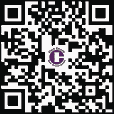
Or register directly at the CCBA marketplace, or by mail/phone: Clark County Bar Association, PO Box 657, Las Vegas, NV 89125 · 702-387-6011. RSVP due before 8/25/2026.
Register via CCBAQuestions worth asking first.
Do I need to know anything about AI before I attend?
No. The program assumes no prior AI experience and no technical background. What it assumes is that you already know how to supervise delegated work, because that is the skill the entire day is built on. Attorneys who already use these tools daily tend to find the value in the verification discipline rather than in the tools themselves.
Is this a vendor pitch?
No. No AI company sponsors this program, there are no affiliate relationships, and there is nothing to buy at the end. The program is sponsored by Bolender Law Firm, PC, the instructor’s own firm, and registration runs through the Clark County Bar Association. Specific tools appear only as examples of a method — the COMMAND framework is deliberately tool-agnostic so that it outlives the current product cycle.
Do I need to buy an AI subscription?
No. Every exercise is designed to run on free-tier tools. If you already have paid access to a frontier model you will get slightly faster results, but nothing in the day depends on it. Setup instructions go out before the program so you are not spending lab time creating logins.
Is it safe to use AI on client work?
That question is the substance of Module 2, and the honest answer is that it depends on facts you have to establish rather than assume: what the tool retains, what its terms of service permit, what your client was told, and what you can document afterward. The module works those questions against live fact patterns rather than discussing them in the abstract. You will not leave with permission. You will leave with a method for deciding.
What is the Baskerville file, and why does it matter?
It is a complete synthetic litigation matter built for this workshop — pleadings, correspondence, claim notes, policy language, and expert material, with plausible errors deliberately planted throughout. Because every document is invented, there is no confidentiality question and no reason to hold back. You can push a tool as hard as you want on a file that reads like a real one, which is the only way to find out where it fails.
Why only 12 seats per session?
Because the labs require the instructor to see what is actually on your screen. Past roughly a dozen participants the format stops being a lab and becomes a lecture, which is the thing this program was built to avoid. The cap applies to each session separately — morning and afternoon are counted independently, and a full-day registration holds a seat in both sessions that day.
Is this program accredited in my state?
The State Bar of Nevada has approved the program for 4.5 General and 1.5 Ethics CLE hours. A Single Activity Provider application is on file with the State Bar of California and approval is pending, so California attorneys should treat California credit as pending rather than confirmed when they register. Attorneys licensed elsewhere are welcome and receive a certificate of attendance showing the hour breakdown, but should confirm their own jurisdiction’s reciprocity or self-reporting rules first.
How are the hours broken down?
The full day is 6.0 CLE hours: 4.5 General from Modules 1, 3, and 4, and 1.5 Ethics from Module 2. The morning session carries 3.0 hours, half of them ethics. The afternoon session carries 3.0 hours, all general. Registration, breaks, and lunch are excluded from the credit calculation.
Can I attend a half day instead of the full day?
Yes. Morning (Modules 1 and 2) and Afternoon (Modules 3 and 4) are each available as standalone half-day registrations at $100. Note that the ethics credit sits entirely in Module 2, so the morning session is the one that carries it.
What do I need to bring?
A laptop you can actually work on, and the ability to sign in to it. This is a bring-your-own-device lab, not a demonstration — you will be typing all day. A tablet with a keyboard will work for most exercises but is not ideal. The printed workbook, the case file, and everything else you need are provided.
The two days are described as identical. Which should I pick?
Whichever fits your calendar. August 27 and August 28 run the same curriculum with the same materials and the same instructor. Since every session is capped at twelve seats, the practical answer is usually whichever still has room.
How do I register, and what is the deadline?
Registration is handled by the Clark County Bar Association — use the link or QR code in the Registration section above. You can also register by mail or phone: Clark County Bar Association, PO Box 657, Las Vegas, NV 89125, 702-387-6011. Registration and payment must reach CCBA before August 25, 2026, and with twelve seats per session it is common for a session to close before that date.
Do I have to be a CCBA member?
No. The morning and afternoon half-day sessions are $100 each and open to any attorney. The $150 full-day rate is offered as a discount to current Clark County Bar Association members. If you are not a member, or are unsure of your status, contact CCBA before registering — they administer registration and pricing for this program.
Can I reuse the workbook and prompts in my own practice?
Yes, and that is the intent — the workbook is built to be opened again, not filed away. Attendees may use the frameworks, prompt structures, and checklists in their own matters without restriction. Redistribution, resale, or use as teaching material for another program requires written permission.
Is the session recorded, and will I get the materials afterward?
The live sessions are not recorded. The format depends on candid discussion of real practice problems, and a camera in the room changes what people are willing to say. Registered attendees receive a link to the downloadable materials, including the reference annexes, after the program.
What is the cancellation or transfer policy?
Registration is administered by CCBA and its cancellation and transfer terms apply. Transfers to the other program day, or to a colleague, are generally accommodated. Because each session is capped at twelve seats, early notice genuinely helps — it lets the seat go to someone on the waiting list.
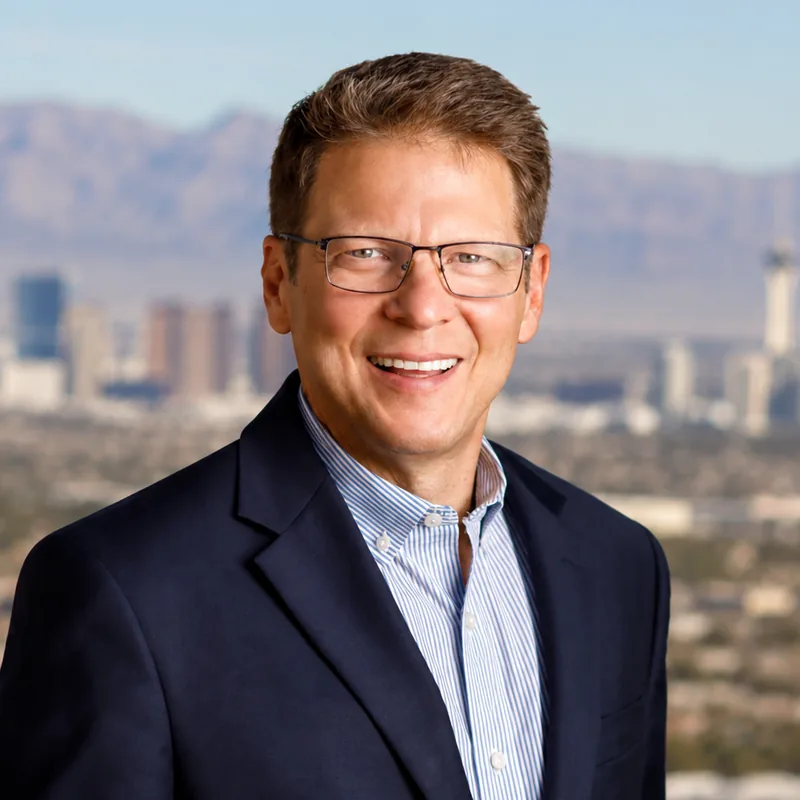
Jeffrey Scott Bolender, Esq.
Insurance and business litigator with more than thirty years of experience in trial, appellate, coverage, bad-faith, and claims-handling matters. Author of The Art of Legal Prompting and architect of the COMMAND framework.
Why I Built This
I am not an AI consultant. I am a coverage and bad-faith lawyer who still takes cases to trial, still prepares experts, and still writes the briefs. I started studying how AI could be used in litigation in May 2023 — cautiously, the way I would vet any new practice tool — and built this program because I needed it myself.
Before I represented policyholders, I ran an insurance-litigation firm on the other side of the table: ten-plus attorneys, multi-jurisdictional coverage and bad-faith work for carriers and underwriters. Running that firm meant delegating real work to other lawyers every day — a clear objective, defined limits, a stated method, and a verification step before anything reached a client or a court. I had learned that discipline earlier, in the Air Force Reserves, where the cost of an ambiguous instruction is not a bad first draft.
When I moved to representing policyholders and later watched AI arrive in this profession, I recognized the same delegation problem, aimed at a machine instead of an associate. That is all COMMAND is. It is not a technology framework. It is a supervision framework, and everything in it is borrowed from things lawyers already know how to do.
I have served on the Clark County Bar Association’s CLE Executive Committee since 2023. That means I have read a great many CLE submissions and sat through a great many programs that were technically compliant and practically useless. I did not want to build another one.
So this is a lab. You bring a laptop, you work a real file, and you leave with a workbook you will actually open again.
— Jeff Bolender
Not sure whether this program fits your practice? Write to me before you register and I will answer it myself — info@aicommand.online.
Nevada CLE Record
A teaching relationship with the Nevada bar spanning more than fifteen years — insurance law, professional responsibility, and, most recently, AI supervision doctrine.
The ABC's of Analyzing a Liability Insurance Policy — an early convention appearance before a statewide Nevada audience, beginning a teaching relationship with the bar that has continued for more than fifteen years.
Will Nevada Adopt the Cumis Requirement? Argued the Nevada Supreme Court would recognize a policyholder’s right to independent counsel where the insurer’s and insured’s interests diverge. Two years later the court did, in State Farm Mut. Auto. Ins. Co. v. Hansen (2015) — holding that an insurer must provide independent counsel on an actual conflict, while declining to treat a reservation of rights as a conflict per se.
Navigating AI in Law Practice: Practical Skills, Professional Challenges & Economic Impacts — the pilot program that became the AI Command Workshop series.
Homeowners insurance disputes, a legal-history CLE on Abraham Lincoln with Nevada Supreme Court Chief Justice Herndon, a live AI-tools session at Boyd School of Law, and a webcast on legal prompting technique.
A mature Nevada-focused CLE package: article, handout, slide deck, table of authorities, and practitioner checklists.
The Art of Legal Prompting distributed as course handout; the foundational session for the four-module COMMAND curriculum.
Founded Bolender & Associates in 2001, building it into a staffed, multi-jurisdictional insurance-litigation firm handling declaratory relief, bad-faith claims, arbitration, and appellate work across California and Hawaii. Restructured in 2014 as Bolender Law Firm, PC, shifting to represent policyholders exclusively. Maintains an active federal practice in California, Hawaii, and the Ninth Circuit.
J.D., Southwestern University School of Law (1994). B.A. in Speech, California State University, Northridge (1991).
Member, Clark County Bar Association CLE Executive Committee, since 2023. Has designed and presented roughly a dozen accredited CLE programs for Nevada attorneys.
Author of The Art of Legal Prompting. Architect of the COMMAND framework, which adapts military delegation doctrine into a repeatable legal workflow.
This program is continuing legal education. Nothing on this site is legal advice, and attending does not create an attorney-client relationship. CLE credit categorization is subject to each jurisdiction’s rules; California accreditation is pending. Registration and CLE administration are handled by the Clark County Bar Association.